What is tartar and why does it form?
Every day a soft, sticky layer of bacteria and food debris builds up on the surface of the teeth. This layer is called plaque (biofilm). If plaque is not removed regularly by brushing and cleaning between the teeth, minerals in the saliva gradually harden it into tartar (dental calculus).
Tartar builds up especially on surfaces close to where the salivary glands open: the tongue side of the lower front teeth and the cheek side of the upper molars. Tartar above the gum line may look yellowish or white. Tartar that extends below the gum line can be darker and is often only noticed at an examination.
How quickly tartar forms varies from person to person. The make-up of the saliva, diet, smoking and how regularly you clean your teeth all affect it.
Why is a scale and polish needed?
Tartar has a rough surface that plaque sticks to easily. Once hardened, it cannot be removed with a toothbrush or floss. Tartar that is not removed can:
- Lead to gum inflammation (gingivitis), with red, swollen gums that bleed when you brush
- Over time pave the way for periodontitis, in which the gums and the bone that supports the teeth are lost
- Contribute to bad breath
- Cause visible discolouration and stains on the teeth
Heavy tartar can also make it harder to examine the teeth in detail; after a cleaning, findings such as decay or receding gums can be seen more clearly.
Gum inflammation is usually reversible when it is noticed early and brought under control with a cleaning and regular care at home. Our guides on bleeding gums and gum disease treatment explain more.
How is a scale and polish done?
- Examination of the mouth and gums; X-rays if needed
- Removal of tartar with ultrasonic instruments, which break it up with vibration and water
- Fine cleaning with hand instruments in hard-to-reach areas
- Removal of plaque and surface stains by polishing or air polishing
- Smoothing of the tooth surfaces
- Personal advice on brushing and cleaning between the teeth
The treatment is usually completed in one session. For people with sensitive teeth, local numbing can be used depending on the dentist’s assessment. Where the gum pockets are deep and there is heavy tartar on the root surfaces, more extensive treatment below the gum line may be needed; this requires a separate assessment.
What does air polishing do?
Air polishing is a cleaning method in which a mix of compressed air, water and a fine-grained powder is sprayed onto the tooth surface in a controlled way.
It is generally used to:
- Remove the plaque layer (biofilm) from the tooth surface
- Remove surface stains from sources such as tea, coffee and smoking
- Help clean areas a toothbrush struggles to reach, such as around brace brackets, implants and between the teeth
Air polishing on its own may not be enough to remove hardened tartar; tartar is usually removed with ultrasonic and hand instruments. Which method is used, and in what order, is decided by the dentist according to the condition of your mouth. Air polishing does not change the natural colour of the teeth, so it is not a substitute for teeth whitening. If you have asthma or a chronic respiratory condition, please mention it at the examination.
How often should you have a scale and polish?
The interval is not the same for everyone. For many people, check-ups every 6–12 months with a cleaning when needed may be enough. More frequent check-ups may be recommended for:
- People who build up tartar quickly
- People with a history of gum disease
- People having treatment with braces or clear aligners
- People with implants or fixed bridges
- Smokers
- People with a condition that can affect gum health, such as diabetes
Can a cleaning fit into a trip for other treatment?
Yes, a scale and polish fits well into a stay for other treatment. It is usually completed in one session, so if you are travelling to Türkiye for treatment such as crowns, implants or root canal treatment, a cleaning can often be added to the same stay. Tell us when you plan your visit, and the appointment will be set together with your other treatment after the examination.
If the examination shows signs of gum disease that need treatment below the gum line, this needs a separate assessment and may mean more appointments; the options are discussed with you before your schedule is fixed. Once you are home, regular check-ups and cleanings can continue with your local dentist or hygienist. Our pages on planning your visit and aftercare after you return home explain more.
What should you look out for after a cleaning?
- Your gums may bleed a little or feel tender on the first day; this usually passes quickly.
- If your teeth are sensitive, avoiding very hot or very cold food and drinks for a few days can help.
- If air polishing was used, you may be advised to limit coloured drinks such as tea and coffee for a short time.
- Brushing twice a day and cleaning between the teeth with floss or interdental brushes slows down new tartar build-up.
How does a scale and polish work at Rönesans?
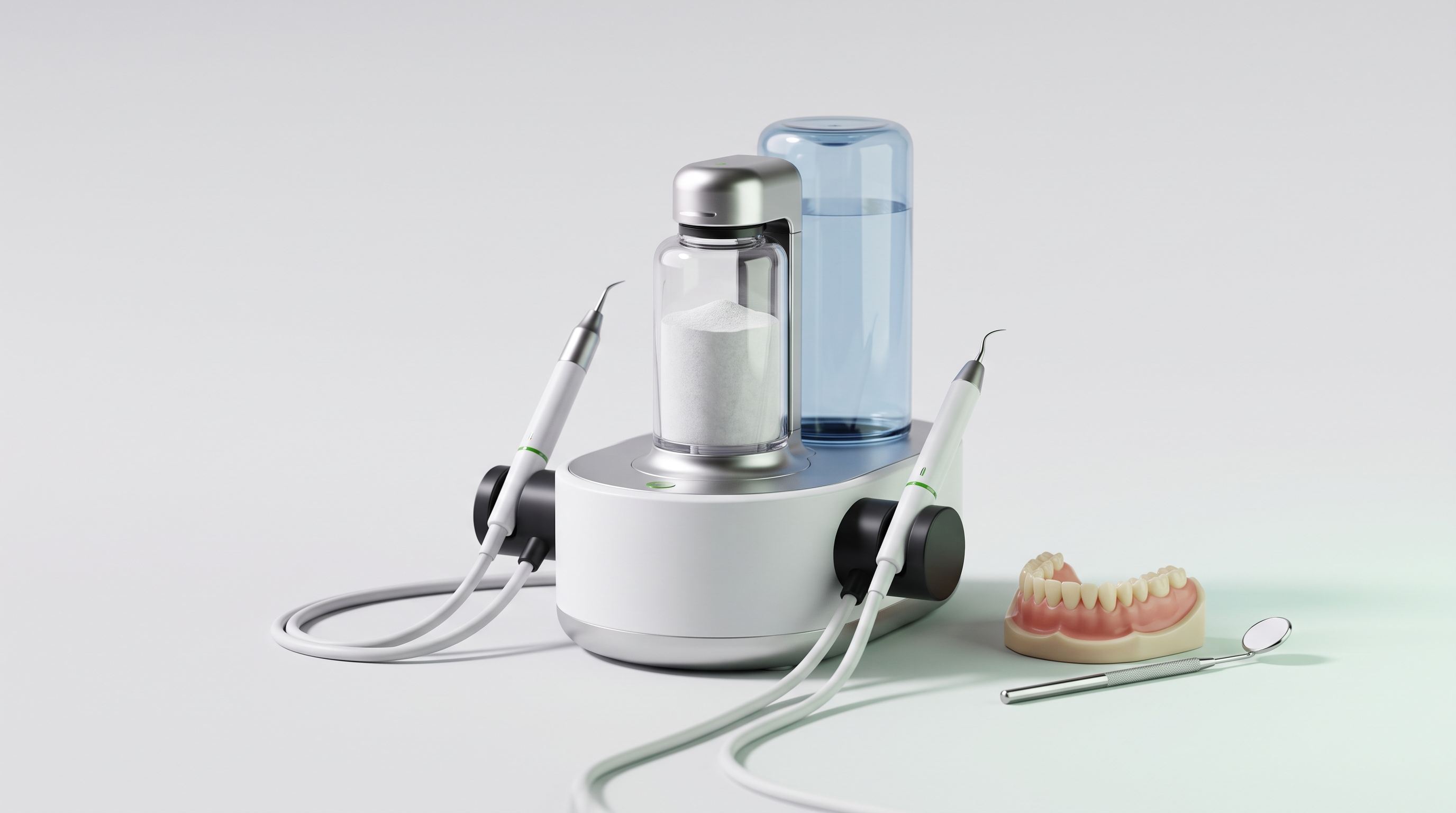
The clinic has an air-polishing device that cleans the tooth surface with a spray of air, water and fine powder. Whether air polishing is used during your cleaning is decided by the dentist after examining your mouth and gums. If signs of gum disease are noticed during the cleaning, the treatment options are discussed separately. The cost is confirmed after the examination, according to the treatment needed.
The clinic is open 10:00–22:00 on weekdays and 10:00–19:00 on Saturdays, and closed on Sundays. You can communicate with us in English or German; to book, call +90 264 606 09 43 or write on WhatsApp at +90 532 363 49 54.