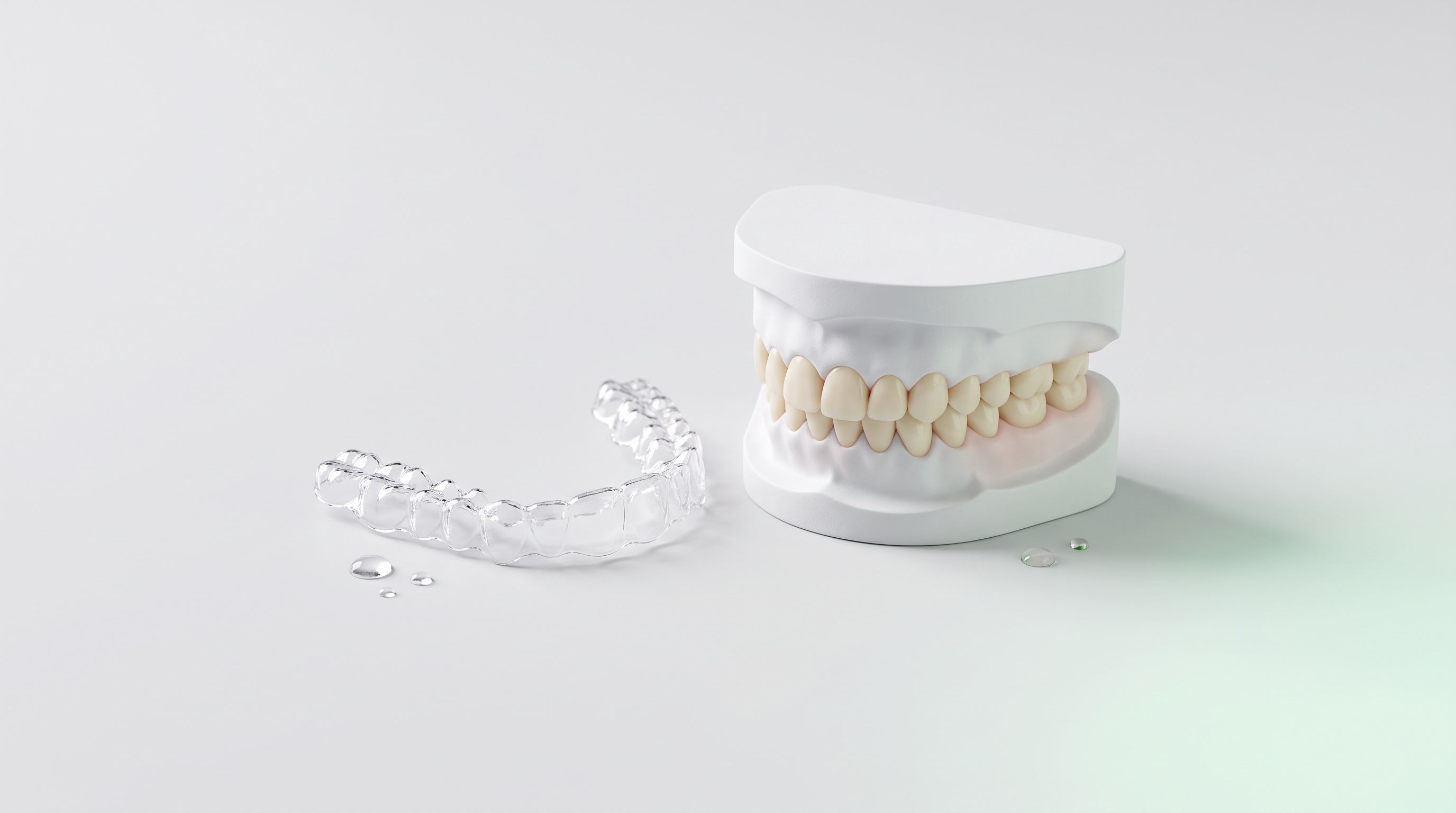
What are clear aligners?
Clear aligner treatment moves teeth gradually with a series of thin, transparent, custom-made aligners. At the start, the movements from the teeth’s current positions to the planned positions are mapped out digitally and divided into small steps. A separate aligner is made for each step.
You wear each aligner for the period set by your dentist and then move on to the next one in the series. Each new aligner moves the teeth a little further. Because aligners are clear, they are rarely noticed when you speak, and you can take them out to eat and brush.
Who are clear aligners suitable for?
Mild to moderate crowding, gaps between the teeth and some bite problems can be treated with aligners. Small shifts after earlier orthodontic treatment can also be assessed. Aligners can be used for adults and for teenagers whose permanent teeth have come through.
Aligners alone may not be enough for marked jaw discrepancies or for teeth that need large rotations or vertical movements. Progress also depends on wearing the aligners for enough hours every day; if you think that will be difficult, fixed braces may suit you better.
Small tooth-coloured bumps called attachments may be bonded to some teeth to help the aligners grip, and a very small amount of enamel may be polished between teeth to create space. Whether these are needed is decided at the planning stage. Read more in our guide on clear aligner attachments.
Clear aligners or braces?
| Feature | Clear aligners | Fixed braces |
|---|---|---|
| Appearance | Clear, rarely noticed | Brackets visible on the teeth |
| Removable | Yes, by the patient | No, removed by the dentist |
| Your responsibility | Wearing aligners for most of the day | Progress does not depend on wearing time |
| Eating and cleaning | Taken out to eat; brush as usual | Some foods avoided; careful cleaning around brackets |
| Typical use | Mostly mild to moderate problems | Simple to complex cases |
What are the steps of treatment?
- Orthodontic examination and assessment of suitability
- Records: digital scan, X-rays and photographs
- Planning the tooth movements and discussing the plan with you
- Making the aligners
- Bonding attachments if needed and fitting the first aligners
- Changing aligners in sequence, with regular check-ups
- Retainers at the end of treatment
At check-ups the dentist checks whether the teeth are moving as planned. If they are not, the plan can be adjusted and additional aligners (a refinement) may be needed, which adds time.
Can I have aligner treatment if I live abroad?
At Rönesans we do not offer clear aligner treatment to patients travelling from abroad. Aligner treatment is different from crowns or implants: it takes months, not days, and the teeth need to be checked regularly while they move. The American Association of Orthodontists says visits to pick up new aligners are typically every six to ten weeks, and the British Orthodontic Society advises against starting treatment if you know you cannot keep your appointments.
If you live abroad, an orthodontist near your home who can see you regularly is the safer choice. Aligner treatment at our clinic is for patients who live in or near Sakarya, or who can attend regular check-ups here. Our page on planning your visit shows which treatments can be completed in one or two trips.
How many hours a day should aligners be worn?
Aligners are usually worn for 20–22 hours a day. Take them out to eat and to drink anything other than water, and brush your teeth before putting them back. Wearing them for less than recommended can stop the teeth from moving as planned and lengthen treatment.
When you switch to a new aligner, your teeth may feel some pressure for a day or two. This shows the aligner is working and usually eases quickly. At the end of treatment, retainers keep the teeth in their new positions.
Looking after your aligners
- Rinse the aligners in cold or lukewarm water whenever you take them out; hot water can warp them.
- Clean them gently with a soft brush, as your dentist advises.
- Drink only water with the aligners in; sugary and coloured drinks trapped underneath can cause decay and staining.
- Keep aligners in their case, not wrapped in a napkin.
- Let the clinic know if an aligner is lost or broken.
How does treatment work at Rönesans?
Orthodontics is one of the treatment areas at Rönesans Diş Hekimliği in Serdivan, Sakarya, and clear aligner treatment is provided for patients who can attend regular check-ups at the clinic. Whether aligners suit you is decided after an examination of your teeth, jaws and bite; if they do not, other orthodontic options are discussed. The scan needed for planning can be taken with an intraoral scanner, without impression paste. You can communicate with us in English or German. The treatment length, aligner change interval, check-up schedule and cost are confirmed after the examination.