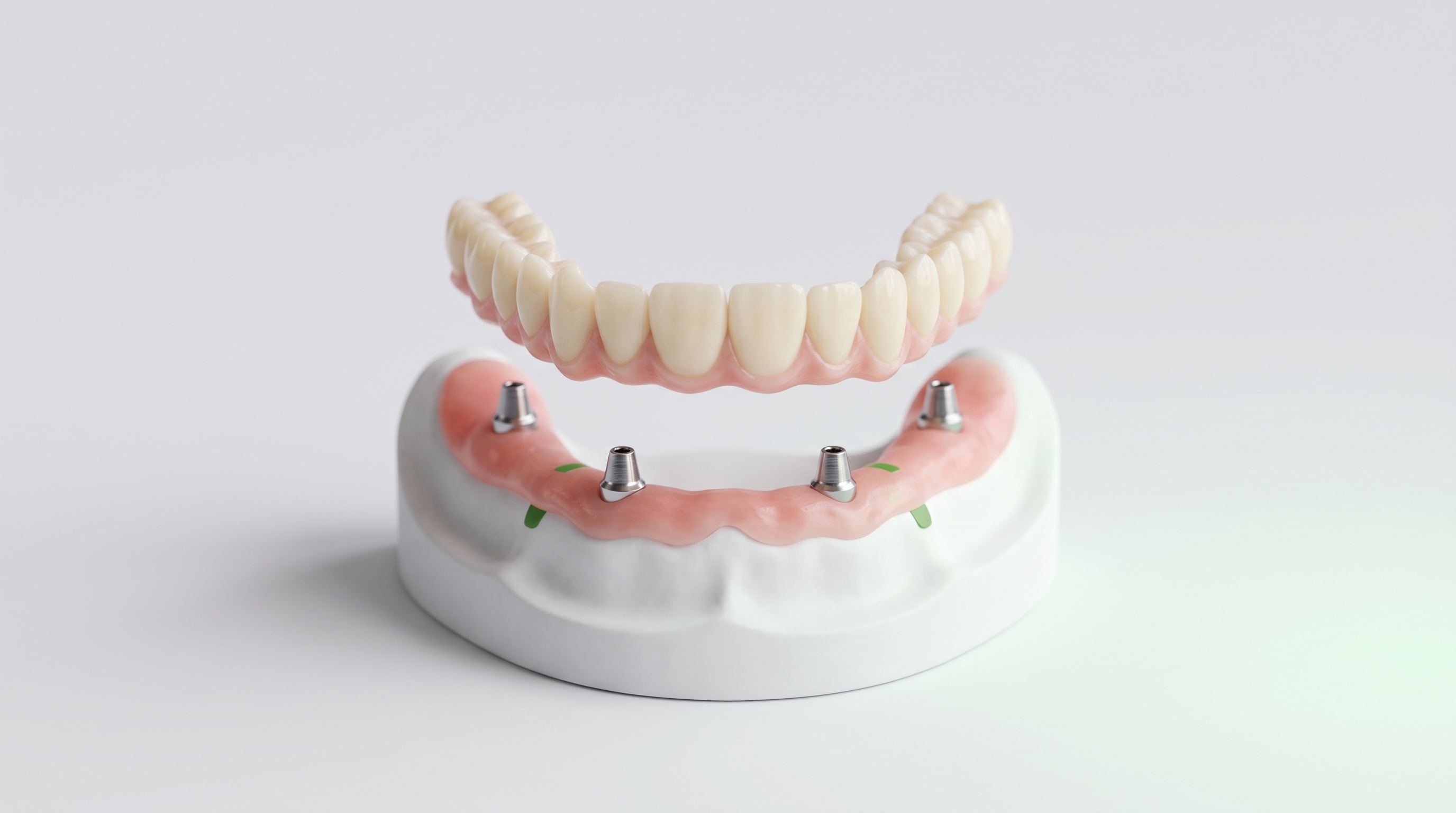
What are full-arch implants?
Full-arch implant treatment replaces a full arch of teeth – all the teeth in the upper or the lower jaw – with a fixed bridge. In one common plan the bridge is supported by four implants. The two front implants are usually placed upright, while the two back implants are often angled to make better use of the available bone and to avoid structures such as the sinuses and nerves. The bridge is screwed onto the implants, so, unlike a denture, it is not taken out at home. Other plans use six implants per jaw; the right number depends on your bone and bite.
Who may be suitable for full-arch implants?
Full-arch implant treatment is usually considered for adults who:
- have lost most or all of the teeth in one jaw
- have teeth that are failing because of advanced gum disease or decay
- wear a loose or uncomfortable denture and would like fixed teeth
Suitability depends on the amount and quality of bone, your general health, smoking habits and how well you can keep the bridge clean. Conditions such as uncontrolled diabetes, certain bone medicines or heavy smoking can affect healing and are assessed individually. A 3D scan is essential, because it shows whether there is enough bone for the implants and where they can be placed. Some people may be better suited to a different plan, such as more implants, bone grafting or an implant-supported removable denture.
How many trips to Türkiye does full-arch treatment usually need?
Most full-arch plans for international patients involve two trips.
- First trip: examination and CBCT scan, removal of any remaining failing teeth, placement of the implants and fitting of a temporary fixed bridge, usually within a few days of surgery.
- Healing period at home: usually several months – commonly around three to six – while the implants bond with the bone. You wear the temporary bridge and follow a soft diet.
- Second trip: digital scans, try-in of the final bridge, fitting and bite adjustments.
The exact timing varies from person to person and is set in your treatment plan after the examination.
What is the difference between the temporary and the final bridge?
The temporary bridge is usually made of acrylic. It is lighter and simpler, and is designed to protect the implants while letting you smile and eat soft food during healing. Because the implants are still bonding with the bone, you are usually asked to avoid hard or chewy food while wearing it.
The final bridge is made once healing is complete and the gums have settled. It is typically stronger and more precisely fitted, and may be made from materials such as zirconia or acrylic on a metal framework. Which material suits you depends on your bite, the opposing teeth and your expectations, and is discussed during planning.
How long should I stay in Türkiye for each trip?
As a general guide only, each trip often takes around seven to ten days. The first trip includes surgery, the temporary bridge and an early check before you fly; the second includes try-ins and adjustments of the final bridge. Your own plan may differ, especially if both jaws are treated or extra procedures are needed. Leave a spare day before your flight home, and remember that the clinic is closed on Sundays and on the days of Ramazan Bayramı and Kurban Bayramı.
What is aftercare like with a full-arch bridge?
In the first weeks after surgery, swelling and bruising are common and usually settle gradually. You will need a soft diet, careful cleaning around the implants and, often, prescribed medicines. Smoking should be avoided, because it can affect healing.
In the long term, a fixed bridge needs daily cleaning underneath and around the implants, for example with interdental brushes or a water flosser. Regular professional check-ups and cleaning are important. Once you are home, you can send photos and questions on WhatsApp, and a local dentist can help with routine care. Before you travel, it is worth asking any clinic which implant system will be used and whether you will receive a record of it, so that another dentist can work on your bridge in future.
How does treatment work at Rönesans?
If you are considering full-arch treatment, the first step is an in-person examination with a cone-beam CT (CBCT) scan at the clinic in Serdivan, Sakarya. We provide fixed full-arch bridges on four or six implants. The 3D images show the bone volume in your jaws, which is the basis for deciding which plan, or another option, suits you. Digital impressions can be taken with an intraoral scanner. You can communicate with the clinic in English or German, and send your photos and X-rays on WhatsApp at +90 532 363 49 54 for a preliminary review before you travel. If a problem covered by our warranty means you need to come back, we cover your travel costs.