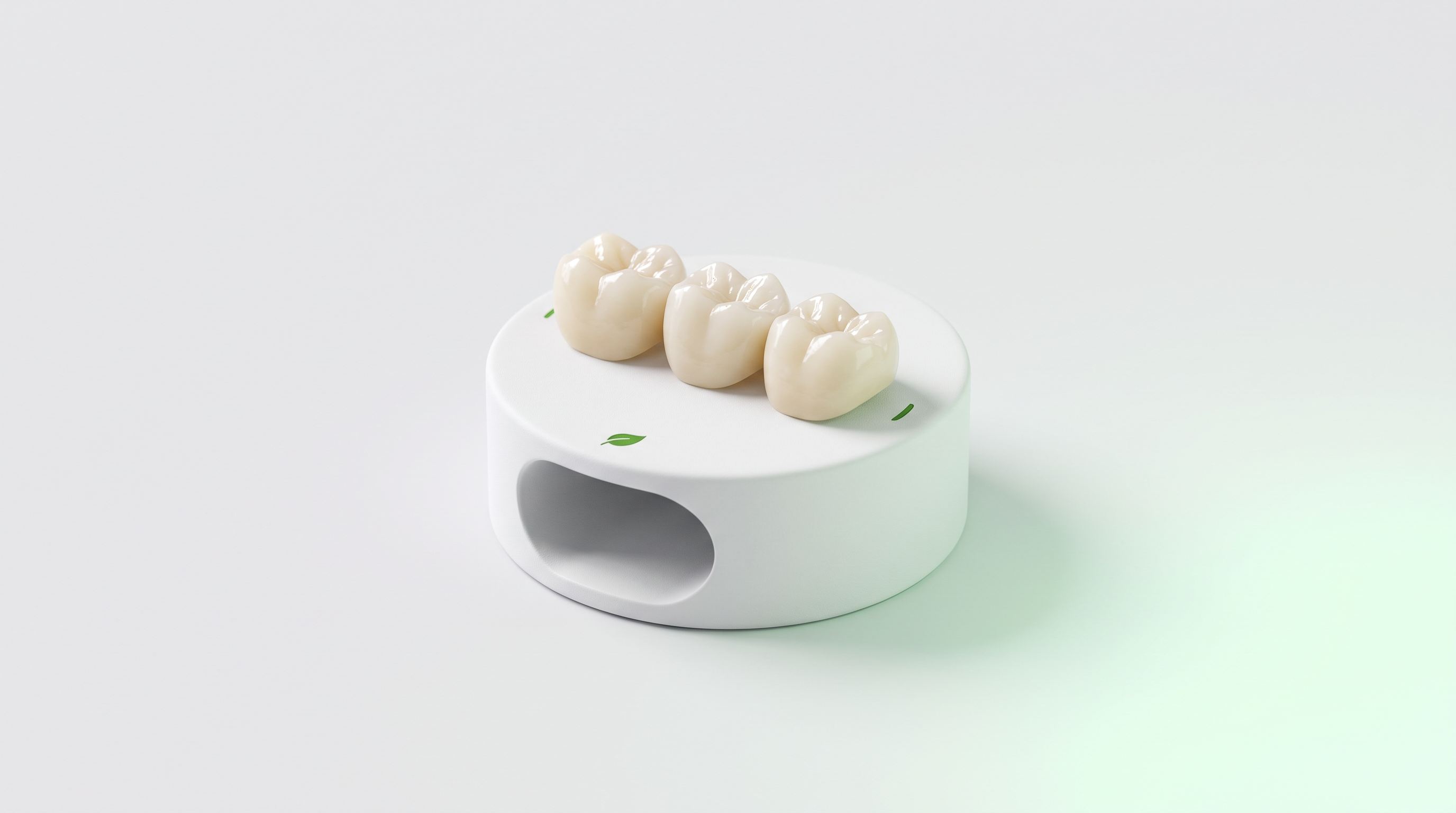
What are zirconia crowns?
A crown is a cap that covers the whole visible part of a tooth to restore its shape, strength and appearance. Zirconia crowns are made from zirconium oxide, a strong, tooth-coloured ceramic with no metal core, so there is no dark line at the gum edge of the kind sometimes seen with older metal-ceramic crowns. They are often called “zirconium crowns”. Zirconia can be used on its own or layered with porcelain for a more natural translucency, especially on front teeth. Crowns can also be placed on dental implants.
When are zirconia crowns recommended – and when are they not?
Crowns are usually recommended for teeth that:
- are broken, cracked or heavily worn
- have large fillings and little natural tooth left
- have had root canal treatment and need protection
- are badly discoloured where whitening will not help
- need restoring on an implant or as part of a bridge
A crown is not always the right answer. Preparing a tooth for a crown permanently removes a layer of enamel and dentine all around it. If your teeth are healthy and your main goal is a whiter or more even smile, less invasive options such as whitening, bonding or veneers may be enough. A good treatment plan explains why each tooth needs a crown. If you are offered crowns on many healthy teeth, it is reasonable to ask why, and to ask about the alternatives.
How many days should I stay in Türkiye for zirconia crowns?
Zirconia crowns can usually be completed in a single trip. As a general guide, many patients allow around five to seven working days, plus a spare day before the flight home. A larger number of crowns, or treatment needed beforehand – for example root canal treatment, gum treatment or replacing old fillings – can extend this.
Your exact schedule is set once the examination is complete, and it may differ from the general guide. The clinic is closed on Sundays, so plan your dates with that in mind.
What happens during the treatment days?
- Examination, X-rays and a discussion of your goals, the shape and the shade
- Any treatment needed first, such as fillings or root canal treatment
- Preparation of the teeth under local anaesthetic
- Digital impression and temporary crowns
- Try-in of the crowns to check fit, shape, colour and bite
- Final cementation and bite adjustment
- A final check before you fly home
Between these steps, the crowns are made by a dental laboratory, which takes some days. This is why appointments are spread across your stay rather than completed in a single day.
How long do zirconia crowns last and how do I look after them?
Zirconia is a durable material, but how long a crown lasts depends on the health of the tooth underneath, your gums, your bite and how well you clean. Nobody can promise a fixed lifespan. To protect your crowns:
- brush twice a day and clean between your teeth daily
- avoid using your teeth to open packets or crack nuts
- wear a night guard if you grind or clench your teeth
- see a dentist for regular check-ups and professional cleaning
After fitting, a new crown can feel slightly different for a few days. If your bite feels high or a tooth stays sensitive, let your dentist know so it can be checked.
What should I ask about follow-up and guarantees?
Before treatment, ask any clinic to explain in writing the materials used, which laboratory makes the crowns, what any guarantee covers and for how long, and what happens if a crown chips or comes loose after you return home. Ask, too, for copies of your X-rays and a summary of the treatment, so that your local dentist can see what was done.
Our treatments come with a conditional warranty for problems not caused by the patient; before treatment starts, we explain at your examination how long it lasts, what it covers and what it does not. You can read more about follow-up and life after treatment on our aftercare and follow-up page.
How does treatment work at Rönesans?
At Rönesans Diş Hekimliği in Serdivan, Sakarya, impressions for crowns can be taken digitally with an intraoral scanner, without impression paste. Crowns and prostheses are made with CAD/CAM at the dental laboratory we work with. Where implants or root problems need closer assessment, we also have cone-beam CT (CBCT). You can communicate with us in English or German, and send photos of your teeth or recent X-rays on WhatsApp at +90 532 363 49 54 for a preliminary review before you travel. The final plan and cost are confirmed after the examination at the clinic. You can pay in cash or by credit card, in Turkish lira or in other currencies such as euros, pounds or dollars.