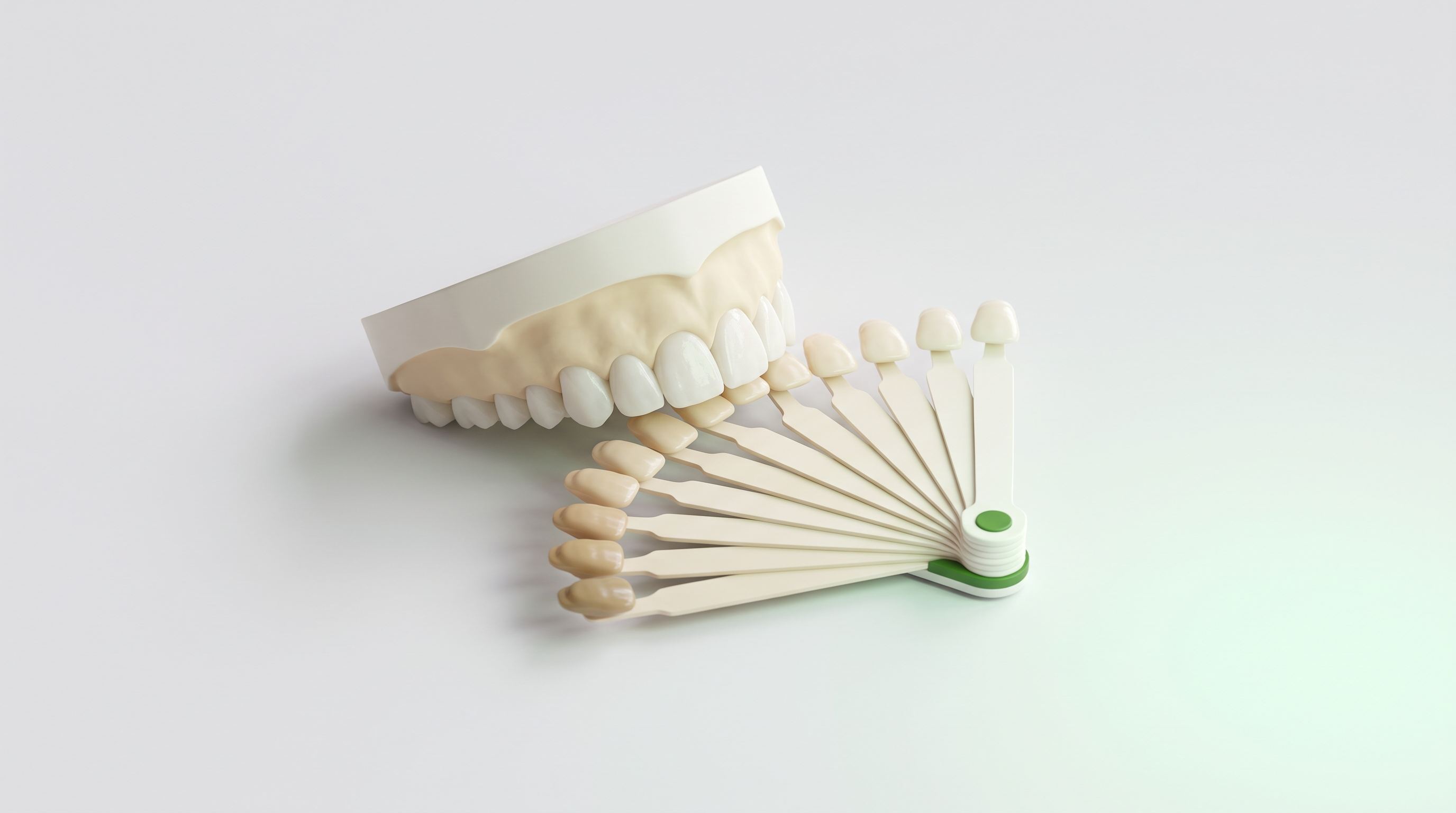
What is teeth whitening?
Teeth whitening lightens the natural colour of the teeth with whitening gels, which usually contain hydrogen peroxide or carbamide peroxide. These penetrate the tooth surface and break down the colour pigments within the tooth, making it look lighter.
Tooth discolouration has two main sources. External stains from tea, coffee, smoking and coloured foods sit mostly on the surface and can largely be removed with professional cleaning. Internal discolouration, linked to age, some medicines, an injury to the tooth or tooth development, is inside the tooth; whitening gives varying results with these.
Who is teeth whitening suitable for?
Adults with healthy teeth and gums who want a lighter natural shade can usually be assessed. Whitening may be postponed or planned differently if:
- there is untreated decay or gum disease, which is treated first
- teeth are very sensitive or have exposed root surfaces
- you are pregnant or breastfeeding; whitening is usually postponed until afterwards
- you are under 18; whitening is generally not recommended
- you have crowns, fillings or veneers on visible teeth, which will not change colour
A single root-filled tooth that has darkened from the inside may be treated with a different, internal whitening method. This is also assessed at the examination.
In-office or home whitening?
| Feature | In-office whitening | Home whitening |
|---|---|---|
| Where | In the dental chair | At home, following the dentist’s instructions |
| How | Gel applied to the teeth after the gums are protected | Gel used in custom-made clear trays |
| Duration | Usually one or a few sessions | Usually regular use over a few weeks |
| Supervision | Carried out under the dentist’s supervision | Followed up at check-ups |
Sometimes both methods are combined. Which method suits you depends on the cause of the discolouration, your sensitivity and your expectations. Whitening products bought online or in shops are not recommended without a dentist’s supervision.
Planning whitening into your trip
At our clinic, whitening is done in-office, in the dental chair, so it fits into a stay rather than continuing at home after you leave. If you are also having crowns or veneers, whitening is usually done first: new restorations are matched to the whitened shade, and the colour needs a few days to settle before the shade is chosen. Discuss the order of treatment and the length of your stay at the examination. Our page on planning your visit gives a general guide.
Will my teeth be sensitive afterwards?
Sensitivity to hot and cold during and after whitening is common and usually eases within a few days. If the gel touches the gums, they can be temporarily irritated. Your dentist can shorten or space out applications and recommend desensitising products. Home remedies such as lemon, baking soda or activated charcoal can wear away enamel and are not recommended.
How long do the results last?
Whitening is not permanent; how long it lasts varies from person to person. Tea, coffee, cola, red wine and smoking can gradually darken the teeth again. To help the result last:
- limit coloured food and drink in the first days
- brush regularly and clean between your teeth
- rinse with water after coloured drinks
- have professional cleaning at the intervals your dentist recommends
- top up whitening under a dentist’s supervision if needed
How does treatment work at Rönesans?
Before whitening, we assess your teeth and gums, existing fillings and crowns, and the cause of the discolouration. Plaque and surface stains are removed first; at our clinic in Serdivan, Sakarya, this can be done with an air-polishing device that sprays a mixture of air, water and fine powder onto the teeth. For some patients the teeth already look lighter after this cleaning, and expectations are discussed again. Whitening at our clinic is done in-office, under the dentist’s supervision; the number of sessions is set at the examination. You can communicate with us in English or German, and send photos on WhatsApp at +90 532 363 49 54 before you travel. The cost is confirmed after the examination.